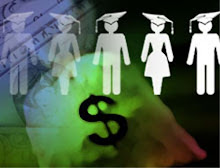
Although federal and state governments are doing the best they can to support the economy, it looks like tuition prices for college could take a nasty spike in the next few years. Recent reports from College Board's annual survey of tuition and fees showed relatively modest increases in tuition costs for the 2008-2009 academic year, with costs rising 1 percent to 3 percent above inflation. But the report also was based on data collected before June and does not reflect the economic issues now embroiling the nation. According to the report, tuition for the year climbed 6.4 percent for in-state students at public four-year institutions to an average cost of $6,585 and 5.9 percent to an average of $25,143 for private colleges. Amazingly the cost of attending community colleges actually declined, after adjusting for inflation, by 0.8 percent to $2,300 for the year. Although financial aid, including both grants and federal loans, increased for the year, particularly from public programs and federal student loans which jumped 6 percent, the number of private loans for higher education, which had been climbing, began to shrink even before the current credit crisis. Experts such as the American Council on Education, a coalition of more than 1,600 college and university presidents, warn that conditions are increasingly ripe for some of the biggest tuition jumps in more than a decade. The main reason is that "state governments, struggling to balance budgets at a time of plummeting tax revenue, are beginning to slash appropriations to post-secondary institutions. Private schools are also having problems as their endowments decline in the stock market and donors grow more cautious with their giving" the group said.
Because of the economic crisis, people are losing jobs and money. Many parents, even in well-off families that normally wouldn't be anxious, are worried about paying for their kids education and in states such as New York, more and more parents are actually pushing their kids toward SUNY(State of New York University) less-expensive, public schools rather than cherished yet costly Ivy League schools such as Harvard that they normally would have supported. Not only are tuition prices going up but applications have increased by roughly 50% so far this fall.
As stated by the New York Times, "Clearly along with the high stress level that comes with a record number of students applying to colleges, there’s the even higher stress level that comes with the realization that in tough times, affording college is no given and there are things that trump fancy windshield stickers from brand-name colleges." Although parents care about what's best for their kids, they also need to be sensible financially, and if that means sending them to top ranked public schools rather than private, it definitely seems too be the better plan.
Wednesday, October 29, 2008

Sunday, October 26, 2008
High School Dropout Rate Increases
According to recent studies kids today are more likely to drop out of high school than their parents. Approximately 1 in 4 kids has been dropping out of school for the last 5 years, and approximately 1 out of 3 minorities drops out of school. Researchers are not positive of the reason for the increased number of dropouts but some evidence points to the increase of disadvantaged children and the influence that family background has on children's shaping educational and adult outcomes. As discussed in my previous post, if the number of poor children continues to rise it will reduce productivity and increase inequality within America.
Many states are taking measures to boost high school graduation rates back up. New Jersey has developed a yearlong, multi-agency plan, called New Jersey High School Graduation Campaign, to boost the state’s graduation rates. It will be led not by the state’s Department of Education but by the state attorney general’s office, with funds from businesses like Verizon and Prudential, among others. New Jersey’s campaign is part of a national effort to reduce dropout rates by America’s Promise Alliance, a Washington-based children’s advocacy group founded by Colin Powell in 1997. Since April, the group has awarded grants of $25,000 to 14 states, including New Jersey and New York, to hold summits to develop communitywide plans for reducing dropout rates. According to spokeswoman Colleen Wilbur, dropouts are more than just a problem for schools, because those students are more likely to become a burden to society — ending up in jail, on welfare rolls or without any health insurance. Solving the dropout crisis will require not only the schools and parent's support, but the support of the entire community, including businesses and churches.
Hopefully if schools can increase their graduation rates and the government can support programs to decrease the number of disadvantaged children in America, more children will be able to attend college and therefore receive better jobs that will propel the out of their lower-class slump. Also if drop-out rates are decreased, welfare programs and the number of people in jail will decrease as well, which would help out the American economy. Another benefit of increased college graduates would be that the united states would be able to keep up with the high-tech competition from other countries and stay ahead in its modern inventions and technology.
Many states are taking measures to boost high school graduation rates back up. New Jersey has developed a yearlong, multi-agency plan, called New Jersey High School Graduation Campaign, to boost the state’s graduation rates. It will be led not by the state’s Department of Education but by the state attorney general’s office, with funds from businesses like Verizon and Prudential, among others. New Jersey’s campaign is part of a national effort to reduce dropout rates by America’s Promise Alliance, a Washington-based children’s advocacy group founded by Colin Powell in 1997. Since April, the group has awarded grants of $25,000 to 14 states, including New Jersey and New York, to hold summits to develop communitywide plans for reducing dropout rates. According to spokeswoman Colleen Wilbur, dropouts are more than just a problem for schools, because those students are more likely to become a burden to society — ending up in jail, on welfare rolls or without any health insurance. Solving the dropout crisis will require not only the schools and parent's support, but the support of the entire community, including businesses and churches.
Hopefully if schools can increase their graduation rates and the government can support programs to decrease the number of disadvantaged children in America, more children will be able to attend college and therefore receive better jobs that will propel the out of their lower-class slump. Also if drop-out rates are decreased, welfare programs and the number of people in jail will decrease as well, which would help out the American economy. Another benefit of increased college graduates would be that the united states would be able to keep up with the high-tech competition from other countries and stay ahead in its modern inventions and technology.
Implications Post
In my theory post, I mentioned how lower level education and the No Child Left Behind Act affect students abilities to get into and succeed in college. I also mentioned another factor that affects higher level education: family background. Many low-income and minority Americans are finding it harder to go to college because of the rising inequality and polarization of society. A greater fraction of young Americans are graduating from college, but at the same time a greater fraction is also dropping out of high school. More children are being born into disadvantaged environments and are receiving relatively less stimulation and resources to promote child development than those born into more advantaged families. Without the resources and backgrounds of more advantaged children, these kids are never able to truly compete on a level playing field and are always behind their more knowledgeable peers in school and in the basic survival skills of life.
There are some options being researched to fix this situation. Three major advocates of of poor children are James J. Heckman, Susan B. Neuman and Geoffrey Canada. Heckman developed the theory that poverty is a problem of skills and poor children grow into poor adults because they are never able, either at home or at school, to acquire the abilities and resources they need to compete in a high-tech service-driven economy .Heckman stresses that these skills are both cognitive (the ability to read and compute) and noncognitive (the ability to stick to a schedule, to delay gratification and to shake off disappointments). According to Heckman if intervention into poor childrens lives is started in infancy and continued through childhood, the skill gap between poor and middle class will be diminished.
That is where the work of Newman and Canada come into play. Neuman has spent several years crisscrossing the nation, examining and analyzing programs intended to improve the lives of disadvantaged children and is publishing a book in November called “Changing the Odds for Children at Risk," that describes nine nonschool interventions. She includes the Nurse-Family Partnership, which sends trained nurses to visit and counsel poor mothers during and after their pregnancies; Early Head Start, a federal program, considerably more ambitious than Head Start itself, that offers low-income families parental support, medical care and day-care centers during the first three years of the lives of their children; Avance, a nine-month language-enrichment program for Spanish-speaking parents, mostly immigrants from Mexico, that operates in Texas and Los Angeles; and Bright Beginnings, a pre-K program in the Charlotte-Mecklenburg school district in North Carolina that enrolls 4-year-olds who score the lowest on a screening test of cognitive ability and manages to bring most of them up to grade level by the first day of kindergarten. These programs all yield positive results but are scattered throughout the country and only influence the first few years of a child's life meaning once students are takne out of the programs the effects begin to diminish.
Canada has designed an agency called the Harlem Children’s Zone that offers integrated social and educational services for thousands of children at once. His program begins with Baby College, a nine-week parenting program that encourages parents to choose alternatives to corporal punishment and to read and talk more with their children. Under his organization students progress through an all-day prekindergarten and then through a charter school,where they have continuous access to community supports like family counseling, after-school tutoring and a health clinic, all designed to mimic the often-invisible cocoon of support and nurturance that follows middle-class and upper-middle-class kids through their childhoods. The goal, in the end, is to produce children with the abilities and the character to survive adolescence in a high-poverty neighborhood, to make it to college and to graduate. So far his results have been uplifting. When the charter schools’ inaugural kindergarten class reached third grade and took their first New York state achievement tests: 68 percent of the students passed the reading test, which beat the New York City average and came within two percentage points of the state average, and 97 percent of them passed the math test, well above both the city and state average.
My point is that unless America does something to help it's poor children, the discrepancy between poor and middle class will continue to grow. How is this applied to higher level education? Colleges are always trying to create more diversity within their campus's by increasing the number of poor and minority students who attend, but if Americas poor children are not well educated or don't have the necessary skills to succeed then that makes college diversity harder to obtain. Not only that but it creates a nearly impossible barrier for poor students to get ahead in life. With Americas growing emphasis on college education, we should look into these different programs and help our poor children obtain the levels of education received by middle and upper class kids. Obama has looked into at the reforms I mentioned above and while they could be expensive, they will also allow poor kids to have the same opportunities as everyone else when they graduate. If America is really about freedom and equality, then these programs should definitely be taken into consideration because unless they are able to receive the benefits that middle and upper class children have from their parents and schools, there is not equality or freedom for poor kids in America.
There are some options being researched to fix this situation. Three major advocates of of poor children are James J. Heckman, Susan B. Neuman and Geoffrey Canada. Heckman developed the theory that poverty is a problem of skills and poor children grow into poor adults because they are never able, either at home or at school, to acquire the abilities and resources they need to compete in a high-tech service-driven economy .Heckman stresses that these skills are both cognitive (the ability to read and compute) and noncognitive (the ability to stick to a schedule, to delay gratification and to shake off disappointments). According to Heckman if intervention into poor childrens lives is started in infancy and continued through childhood, the skill gap between poor and middle class will be diminished.
That is where the work of Newman and Canada come into play. Neuman has spent several years crisscrossing the nation, examining and analyzing programs intended to improve the lives of disadvantaged children and is publishing a book in November called “Changing the Odds for Children at Risk," that describes nine nonschool interventions. She includes the Nurse-Family Partnership, which sends trained nurses to visit and counsel poor mothers during and after their pregnancies; Early Head Start, a federal program, considerably more ambitious than Head Start itself, that offers low-income families parental support, medical care and day-care centers during the first three years of the lives of their children; Avance, a nine-month language-enrichment program for Spanish-speaking parents, mostly immigrants from Mexico, that operates in Texas and Los Angeles; and Bright Beginnings, a pre-K program in the Charlotte-Mecklenburg school district in North Carolina that enrolls 4-year-olds who score the lowest on a screening test of cognitive ability and manages to bring most of them up to grade level by the first day of kindergarten. These programs all yield positive results but are scattered throughout the country and only influence the first few years of a child's life meaning once students are takne out of the programs the effects begin to diminish.
Canada has designed an agency called the Harlem Children’s Zone that offers integrated social and educational services for thousands of children at once. His program begins with Baby College, a nine-week parenting program that encourages parents to choose alternatives to corporal punishment and to read and talk more with their children. Under his organization students progress through an all-day prekindergarten and then through a charter school,where they have continuous access to community supports like family counseling, after-school tutoring and a health clinic, all designed to mimic the often-invisible cocoon of support and nurturance that follows middle-class and upper-middle-class kids through their childhoods. The goal, in the end, is to produce children with the abilities and the character to survive adolescence in a high-poverty neighborhood, to make it to college and to graduate. So far his results have been uplifting. When the charter schools’ inaugural kindergarten class reached third grade and took their first New York state achievement tests: 68 percent of the students passed the reading test, which beat the New York City average and came within two percentage points of the state average, and 97 percent of them passed the math test, well above both the city and state average.
My point is that unless America does something to help it's poor children, the discrepancy between poor and middle class will continue to grow. How is this applied to higher level education? Colleges are always trying to create more diversity within their campus's by increasing the number of poor and minority students who attend, but if Americas poor children are not well educated or don't have the necessary skills to succeed then that makes college diversity harder to obtain. Not only that but it creates a nearly impossible barrier for poor students to get ahead in life. With Americas growing emphasis on college education, we should look into these different programs and help our poor children obtain the levels of education received by middle and upper class kids. Obama has looked into at the reforms I mentioned above and while they could be expensive, they will also allow poor kids to have the same opportunities as everyone else when they graduate. If America is really about freedom and equality, then these programs should definitely be taken into consideration because unless they are able to receive the benefits that middle and upper class children have from their parents and schools, there is not equality or freedom for poor kids in America.
Wednesday, October 22, 2008
Credit Card Scam
One reason more and more college students are find themselves in debt could be contributed to the credit card industry. A recent article by CQ researcher found that between 1980 and 2005, Americans' annual credit card purchases jumped 25-fold — from $69 billion to $1.8 trillion and even worse credit card companies seem to be targeting college students, with many students receiving hundreds of credit card offers in just one year. Credit companies unfairly target student because of the expense of college life and many students who but into these companies schemes end up in debt. Many university officials and congressmen have begun investigating these companies and placed restrictions on how credit cards can be marketed t public universities. With financing from the Ford Foundation, U.S. PIRG has begun a national campaign urging schools to adopt some common-sense principles that would help shield students from credit card marketers and financial ruin. Hopefully with a better education on the damages of credit cards and more protection from greedy companies students will be able to make wise decisions regarding credit cards and focus on more important and manageable issues such as paying off student loans.
Tuesday, October 21, 2008
Thoery Post
As I mentioned in my last blog student loans are becoming more common and are in high demand due to higher rates of unemployment and debt within families, a result of the recent financial crisis. Not only are low-income families affected by the economy failure, middle class families are also finding it harder and harder to put their children through college.The federal government is doing its best to supply loans to families in need but with both tuition costs and the federal deficit at an all-time high, this is more easily said than done. Although the government has been able to provide some loans to most families in need, they rarely cover the entire cost of tuition and many students must find other means of paying their tuition in full. Both Obama and McCain seem to agree that student loans are an important aspect in allowing students to receive a higher education as well as that reform is needed on the no child left behind act in K-12 schools.
Before I discuss lower level education more thoroughly I want to recall one of my older blog posts dealing with loans versus merit-based scholarships. The federal government right now offers a majority of its aid in the form of loans because it fairer for low-income and minority students who normally don't have the grades to earn scholarships. The capability of minority and low-income students to earn good grades is a result of both the schools they attend and their family background. One way the government is trying to improve education and school quality is through the controversial no child left behind act. While this act, originally designed to bring all students at every American school to proficiency in reading and math by 2014, has helped students show improvement, many people, particularly teachers believe it places way to much emphasis on standardized tests and sets near impossible standards. For example in California students are required to increase 11% in proficiency each year until 100% is reached and many states have more rigorous testing than others . In order to improve this act, Congress should lower the requirements it sets but continue to place emphasis on highly-qualified educators and improvement in schools. If there was another way to determine the effectiveness of the act besides testing I believe the act would help improve schools much more efficiently because teachers would not have to base their curriculum according to tests.
Monday, October 20, 2008
How badly is the economy affecting college students?
According to a recent article in the New York Times the recent financial crisis is affecting students ability to pay for college. Federal loans account for 3/4 of student borrowing and the government assured to keep money flowing by buying those loans even with fewer companies in business but often times these loans are not enough to cover the entire tuition. With an increased rate of unemployment and the threat of recession gripping the country, many more families are expecting to need student loans this year. The number of applications for federal aid so far this year has risen to 13.5 million, up nearly 10 percent from 12.3 million from last year. One way that students and parents are paying the extra cost of tuition is by purchasing PLUS loans, which are the same as Stafford loans but are signed in the parents name. However many students do not qualify for PLUS loans and must resort to borrowing from relatives or private lenders who are becoming hard to recieve due to the financial crisis. Although colleges have taken many measures to make tuition more affordable, such as converting loans to grants and allowing tuition cuts to families making certain amounts, the financial crisis has placed a bump in the road and outweighed the amount of help colleges can provide. Hopefully the next elected president can help get our economy back on track so that not only student loans, but stock markets, government funding, and everything else affected by the failure of the economy can get back to normal and work more efficiently.
Sunday, October 19, 2008
Recommended Blogs
With the 2008 election occurring next month things are really heating up in politics. In my opinion some of the most important issues in todays society are the economy, the energy crisis, and the always controversial debate over taxes. Below are three blogs that I have found to be extremely helpful in keeping up with the fast-paced and ever changing world of politics, especially in the issues described above.
Renewable Energy:The New Oil?
With the depletion of nonrenewable resources such fossil fuels and natural gas, the growing price of gas and oil, and increased global warming, America is in serious need of some new energy resources. This blog by Tommy discusses the danger of Americas large consumption of nonrenewable resources and offers many different renewable techniques such as geothermal energy, biofuels, solar energy and hydropower that can be improved and mastered to help make our energy use more efficient. Through his blog, readers learn not only learn the views and solutions offered by McCain and Obama but are also well informed of the effects of fuel consumption in US and the rest of the world. Tommy keeps his blog up to date and has the latest information on the election and energy world.
Apparently Money Doesn't Grow on Tree's
2008 has introduced a lot of new problems into the economy. The mortgage bubble that has been building up for the past few years has finally been recognized and created a major financial crisis. Huge companies are crumbling, banks are declaring bankruptcy, and the stock market is crashing. All of these factors have created the need for a bail plan, which is just one of the issues discussed in Britney's blog. It also provides details on candidates plans for boosting the economy back up and discusses whether the US government places enough regulation on its capitalist economy. Britney includes many interesting video clips and images and updates her blog regularly to help readers stay in touch with the financial issues of America and the latest plans to bailout the economy.
The Issue On Taxes
No matter who gets elected in this years election, one thing is for sure...the amount Americans pay in taxes will see drastic change. Whether this change will be good or bad and who is affected most will be determined according to who is elected president. If Obama is elected president then lower and middle class Americans earning less than 250,000 a year will be very greatful to see tax breaks while those earning more will not be as happy to see an increase in taxes. If McCain is elected, Americans earning over 250,000 will be appreciative of tax breaks while those earning less will have a heavier burden to pay. This and other issues relating to taxes and the economy are analyzed and discussed in this blog by IGetNosSleep. The views of the candidates are expressed in extreme detail while possible consequences of their plans to the economy and government services are presented. This blog really helps readers to develop an educated opinion of whose tax policy will best benefit the economy and who to support and vote for in the 08 election.
Renewable Energy:The New Oil?
With the depletion of nonrenewable resources such fossil fuels and natural gas, the growing price of gas and oil, and increased global warming, America is in serious need of some new energy resources. This blog by Tommy discusses the danger of Americas large consumption of nonrenewable resources and offers many different renewable techniques such as geothermal energy, biofuels, solar energy and hydropower that can be improved and mastered to help make our energy use more efficient. Through his blog, readers learn not only learn the views and solutions offered by McCain and Obama but are also well informed of the effects of fuel consumption in US and the rest of the world. Tommy keeps his blog up to date and has the latest information on the election and energy world.
Apparently Money Doesn't Grow on Tree's
2008 has introduced a lot of new problems into the economy. The mortgage bubble that has been building up for the past few years has finally been recognized and created a major financial crisis. Huge companies are crumbling, banks are declaring bankruptcy, and the stock market is crashing. All of these factors have created the need for a bail plan, which is just one of the issues discussed in Britney's blog. It also provides details on candidates plans for boosting the economy back up and discusses whether the US government places enough regulation on its capitalist economy. Britney includes many interesting video clips and images and updates her blog regularly to help readers stay in touch with the financial issues of America and the latest plans to bailout the economy.
The Issue On Taxes
No matter who gets elected in this years election, one thing is for sure...the amount Americans pay in taxes will see drastic change. Whether this change will be good or bad and who is affected most will be determined according to who is elected president. If Obama is elected president then lower and middle class Americans earning less than 250,000 a year will be very greatful to see tax breaks while those earning more will not be as happy to see an increase in taxes. If McCain is elected, Americans earning over 250,000 will be appreciative of tax breaks while those earning less will have a heavier burden to pay. This and other issues relating to taxes and the economy are analyzed and discussed in this blog by IGetNosSleep. The views of the candidates are expressed in extreme detail while possible consequences of their plans to the economy and government services are presented. This blog really helps readers to develop an educated opinion of whose tax policy will best benefit the economy and who to support and vote for in the 08 election.
Subscribe to:
Posts (Atom)